Need TV Repair Services in Nairobi?
Certified technicians dispatched to you — same day.
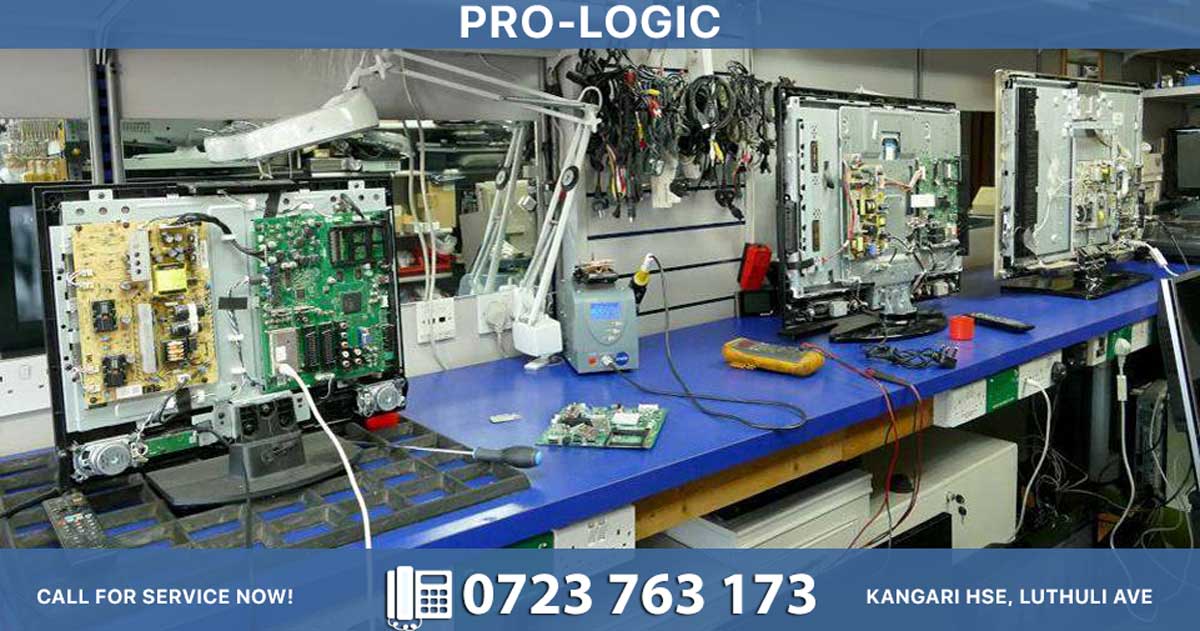
Internal TV circuit board repairs involve high-voltage components, capacitors that store dangerous electrical charge, and sensitive electronics that can be damaged by improper handling. Following proper safety protocols protects you from electrical shock, prevents injury from sharp interior components, and avoids costly damage to the television.
Power Safety Essentials
| Precaution | Purpose |
|---|---|
| Unplug the TV from the wall outlet before starting any work | Eliminates direct AC power source and prevents electrical shock |
| Hold the power button down for 60 seconds after unplugging | Drains residual power stored in capacitors that could shock you |
| Disconnect the power supply from the main board before touching other internal components | Isolates high-voltage sections from logic boards for safer handling |
| Never assume metal surfaces inside are safe to touch | Grounds can be at different electrical potential than your body and still shock you |
Personal Protective Equipment
-
Wear safety glasses to protect eyes from flying debris, sharp edges, and potential component explosions
-
Use insulated gloves or handle circuit boards only by the edges to prevent electrostatic damage
-
ESD wrist straps prevent electrostatic discharge that can destroy sensitive microelectronic components
-
High-voltage rubber gloves with leather over-gloves for CRT repairs involving flyback transformers and neck boards
Workspace Setup
| Setup Requirement | Why It's Important |
|---|---|
| Place TV face-down on soft surface (bed or folded blanket larger than TV) | Prevents damage to panel/screen while accessing back components |
| Keep work area dry and well-lit | Reduces slip hazards and improves visibility of small solder points and components |
| Use non-metallic plastic tools for adjustments on running equipment | Prevents nasty arcs that could burn skin when working with high voltage |
| Never allow screws to rest on exposed circuitry | Avoids short circuits that permanently damage components |
High-Voltage Specific Precautions (CRT TVs)
-
Keep one hand behind your back when working with high-voltage equipment
-
Work with only one hand inside CRTs when making adjustments
-
Avoid touching around the anode cap and flyback wire (red wire)
-
Never use metal tools to adjust running CRTs — your skin is less conductive than metal, but metal tools create nasty arcs
-
Get a plastic adjustment tool instead of screwdrivers for high-voltage adjustments
-
Be especially aware of heat sinks which may carry high voltage rather than ground, especially on neck boards
-
Don't touch the copper wire around the yoke
-
Never assume insulated anode wire is safe — they carry hefty static charge on the jacket that can painfully shock your skin
Essential Tools for Safe TV Repair
-
Electric screw gun or regular screwdriver
-
Small fine-tip screwdriver for T-con boards and Wi-Fi boards
-
Plastic spudger (wedge-shaped) for prying backs off and releasing boards from chassis
-
Plastic adjustment tools for CRT high-voltage work
-
Multimeter for checking shorts and verifying voltage levels
Critical "Never" Rules
-
Never assume grounded metal is safe — even grounds can shock you at different potential
-
Never touch the anode wire even when insulated — hefty static charge on jacket
-
Never work alone on high-voltage equipment
-
Never force connections — this causes fracturing or breaking of back plates
-
Never replace parts randomly without diagnosing root cause first
-
Never work while tired — stay calm and take your time
Additional Safety Best Practices
-
Ground yourself before touching boards to prevent static damage to components
-
Stay calm and be patient — TV repair can be tedious, expecting problems
-
Watch educational videos to familiarize yourself with inherent dangers of working inside TVs
-
Ask for professional help when in doubt
-
Understand the circuit board before attempting repairs
-
Always operate with power off — electronic components pose potential hazards
Modern televisions contain complex circuitry with processors that fail easily. Involuntary muscle contractions from electrical shock can cause collateral damage from contact with sharp edges inside equipment and other electrically live parts. Power-off operation is mandatory for all circuit board repairs.