Need TV Repair Services in Nairobi?
Certified technicians dispatched to you — same day.
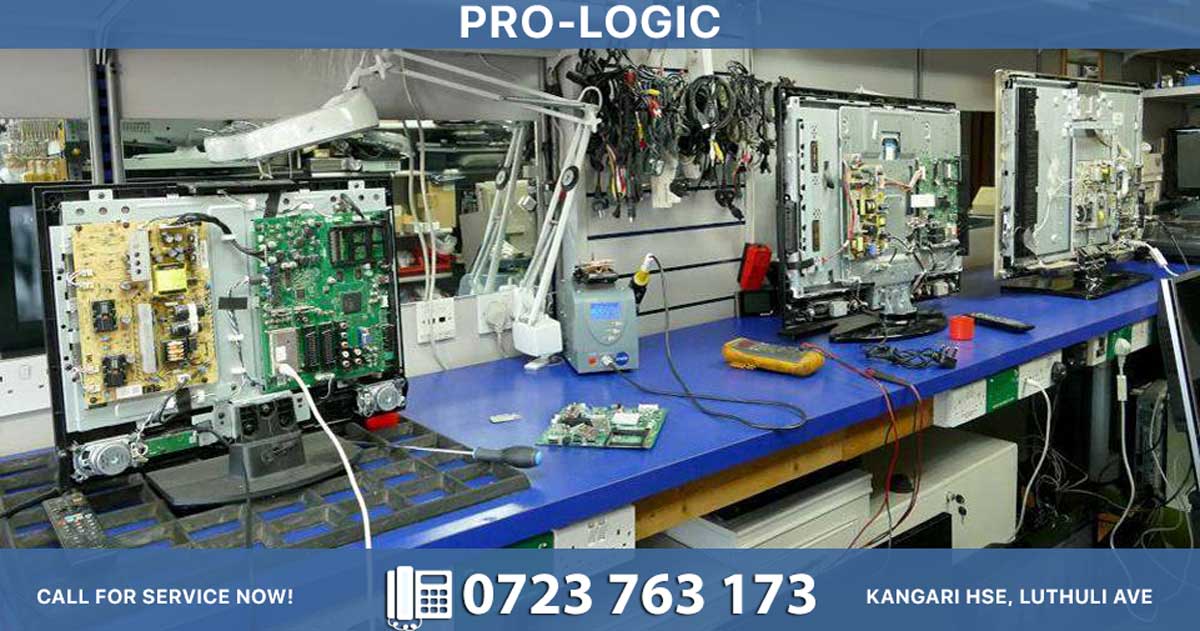
When a home theatre system develops a fault, the challenge is often narrowing the problem from the system level to the specific component responsible. Is the distortion coming from the amplifier, the speaker, or the cable? Is the intermittent dropout caused by the source device, the HDMI cable, or the receiver's input board? Component-level testing in Nairobi isolates and tests individual components within the audio system, providing precise fault localisation that enables targeted repair or replacement rather than a costly trial-and-error approach.
Testing Individual Components
Component-level testing treats each element of the audio system — source devices, cables, receivers, amplifiers, speakers, and subwoofers — as an independent unit that can be tested in isolation. A speaker is disconnected from the system and tested with a known-good amplifier to confirm whether the fault is in the speaker or the system driving it. An amplifier is tested with a known-good source and known-good speakers to isolate its contribution to the fault.
For electronic components, component-level testing may involve measurements at the component level within the device itself — testing the output voltage of a power supply, checking the charge capacity of filter capacitors, or measuring the idle current of output transistors. These measurements require access to the interior of the device and appropriate test equipment (a digital multimeter, oscilloscope, or component tester), and should only be conducted by a qualified technician with knowledge of the relevant safety precautions.
Speaker Component Testing
For multi-driver speaker systems, component-level testing in Nairobi individually tests each driver. Tweeter coils are measured for correct impedance — a significant deviation from the nominal impedance indicates a damaged or failing driver. Woofer cones are inspected for surround separation or dustcap deformation. Crossover components — capacitors and inductors — are tested for correct values, as aged capacitors in particular drift from their nominal specification, degrading the crossover frequency accuracy and altering the speaker's tonal character.
The result of a thorough component-level testing in Nairobi session is a precise diagnosis: not "the system sounds wrong" but "the tweeter in the left speaker has an open voice coil and requires replacement" or "the power supply capacitors in the receiver are aged and should be recapped." This precision makes repair planning efficient and cost-effective.