Need TV Repair Services in Nairobi?
Certified technicians dispatched to you — same day.
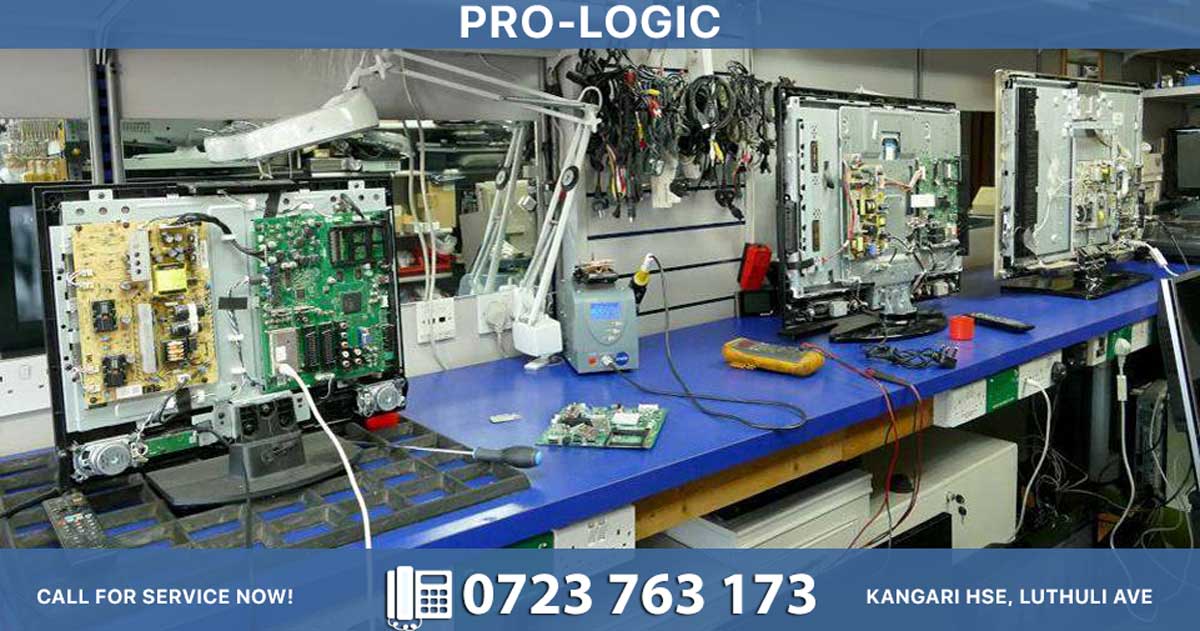
Understanding the differences between repairing LED and OLED display panel faults is crucial for technicians and consumers alike. While both technologies deliver high-quality visuals, their construction and failure modes differ significantly, leading to distinct repair approaches. LED displays use a backlight system with liquid crystal display panels, whereas OLED displays feature self-emissive pixels that produce their own light. This fundamental difference impacts how faults manifest and how they are addressed during repairs.
LED display panel faults often involve issues with the backlight system, LCD panel, or associated circuitry. Common problems include backlight failures, where the screen appears dark but images are faintly visible with a flashlight. This usually indicates a faulty LED strip, inverter board, or power supply issue. Another frequent issue is dead pixels or stuck pixels, which appear as small black or colored dots on the screen. These can sometimes be resolved through pixel-fixing software or manual pressure methods, but physical damage to the LCD panel often requires replacement. Additionally, color distortion or banding may result from damaged polarizers, misaligned layers, or faulty T-Con boards. Repairing LED displays typically involves replacing the backlight components, LCD panel, or control boards, depending on the diagnosed fault.
OLED display panel faults present different challenges due to their self-emissive nature. Each pixel in an OLED display produces its own light, which means issues like dead pixels or burn-in are more permanent and difficult to repair. Burn-in occurs when static images are displayed for extended periods, causing permanent image retention. Unlike LED displays, OLED burn-in cannot be fixed through simple component replacement and often requires panel replacement. Another common issue is uneven brightness or color degradation, which happens as organic materials in the pixels degrade over time. OLED displays are also more susceptible to water damage, as the organic compounds can be affected by moisture. Repairing OLED faults usually involves replacing the entire panel, as individual pixel repairs are generally not feasible.
The repair process for LED displays is often more modular and cost-effective. Technicians can replace specific components like LED strips, backlight drivers, or control boards without replacing the entire display. This makes LED repairs more affordable and accessible. Diagnostic tools can identify which part of the backlight or control system is failing, allowing for targeted repairs. In contrast, OLED display repairs are more complex and expensive. Since the display panel itself contains all the light-emitting pixels, any significant fault typically requires a full panel replacement. This makes OLED repairs costlier, especially for larger screens. Additionally, OLED panels are more sensitive to handling and require specialized equipment to avoid further damage during the repair process.
Another key difference lies in the tools and expertise required for each type of repair. LED display repairs often require knowledge of backlight systems, LCD technology, and various control boards. Technicians need to be skilled in diagnosing power supply issues, backlight failures, and signal processing problems. For OLED displays, the focus shifts to understanding organic light-emitting diode technology, pixel degradation, and the delicate nature of the panels. Specialized training is often necessary to handle OLED repairs safely and effectively.
In conclusion, the differences between repairing LED and OLED display panel faults stem from their distinct technologies and construction. LED displays offer more modular and affordable repair options, focusing on backlight systems and control boards. OLED displays, with their self-emissive pixels, present more complex and costly repair challenges, often requiring full panel replacements. Understanding these differences helps consumers make informed decisions about repairs and technicians prepare the appropriate tools and knowledge for each type of display.