Need TV Repair Services in Nairobi?
Certified technicians dispatched to you — same day.
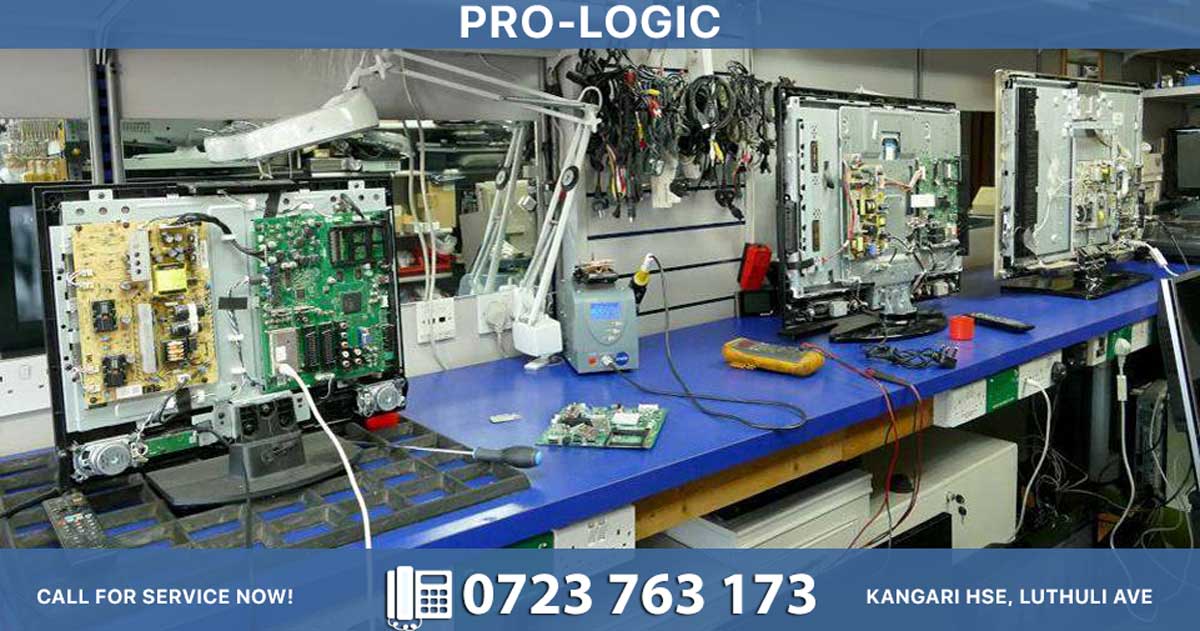
Identifying bad components on a TV circuit board requires a systematic approach, a basic understanding of electronics, and the right tools. TV circuit boards contain various components, such as resistors, capacitors, diodes, transistors, integrated circuits, and connectors. A failure in any of these can cause a range of issues, from no power to display artifacts. While professional technicians use advanced equipment like multimeters, oscilloscopes, and signal generators, you can perform some basic checks with a visual inspection and a multimeter.
Start with a visual inspection of the circuit board. Look for obvious signs of damage, such as burn marks, discoloration, or bulging components. Capacitors are a common point of failure and often show visible signs when they fail. A bulging or leaking capacitor is a clear indicator of failure and should be replaced. Similarly, resistors may show burn marks or discoloration if they have failed. Diodes and transistors can also fail, but their failures are less visually obvious. Inspect the solder joints for cracks, cold joints, or bridges between adjacent pads, as these can cause connectivity issues.
Use a multimeter to test components for continuity and proper values. A multimeter can measure resistance, voltage, and continuity, which can help identify faulty components. Start by checking the power supply board, as it is a common source of issues. Set the multimeter to the continuity or resistance mode and test the fuses. A blown fuse will show no continuity and should be replaced with a fuse of the same rating. Next, check the capacitors for proper capacitance. While a multimeter cannot directly measure capacitance, you can check for shorts or open circuits. A shorted capacitor will show zero resistance, while an open capacitor will show infinite resistance.
Test the voltage regulators and other integrated circuits (ICs) on the board. Use the multimeter in DC voltage mode to measure the output voltage of the regulators. Compare the measured voltage to the expected value, which is often printed on the IC or in the TV service manual. If the voltage is significantly higher or lower than expected, the regulator may be faulty. Similarly, check the voltage at the input and output of other ICs to ensure they are receiving and providing the correct voltages. Be cautious when measuring voltages, as some components may retain a charge even when the TV is unplugged.
Inspect the connections and traces on the circuit board. Loose or damaged connectors can cause intermittent issues or complete failures. Ensure all connectors are securely seated and not damaged. Check the traces, which are the copper lines on the board that connect components, for breaks or shorts. A broken trace can prevent a signal from reaching its destination, while a short can cause a component to fail or the board to malfunction. Traces can be repaired with a small wire and solder, but this requires precision and skill.
Use the process of elimination to isolate the faulty board or component. If the TV has multiple circuit boards, such as a main board, power supply board, and T-Con board, try swapping known-good boards from a similar TV to identify the faulty one. This process requires compatible boards and is best done by professionals. Alternatively, if you have a schematic or service manual for the TV, you can use it to trace the signal paths and identify the likely source of the issue.
If you are not experienced with electronics repair, it is best to seek professional help. TV circuit boards contain high-voltage components that can be dangerous, and improper handling can cause further damage or personal injury. Additionally, some issues, such as failed ICs or complex trace damage, require advanced diagnostic equipment and expertise to repair. If the TV is still under warranty, contact the manufacturer for support, as attempting to repair the circuit board yourself will likely void the warranty.
For those with some electronics experience, online forums and repair communities can be valuable resources. These communities often share schematics, service manuals, and troubleshooting tips for specific TV models. Additionally, you can purchase replacement components or boards from repair suppliers or salvage them from donor TVs. However, always exercise caution and prioritize safety when working with electronics.