Need TV Repair Services in Nairobi?
Certified technicians dispatched to you — same day.
How to Start a Successful TV Repair Business in Kenya
The demand for TV repair services in Kenya is growing due to the high cost of new televisions and the increasing number of digital and smart TVs in households. Starting a TV repair business can be a profitable venture if done correctly. This guide provides a step-by-step approach to launching and running a successful TV repair business in Kenya.
Step 1: Acquire TV Repair Skills and Certification
Before starting a TV repair business, it is essential to have the necessary skills and training. You can learn TV repair from technical institutes, vocational colleges, or through apprenticeships with experienced technicians.
Some of the best institutions offering TV repair courses in Kenya include:
- Nairobi Technical Training Institute (NTTI) – Park Road, Nairobi
- Kabete National Polytechnic – Kabete, Nairobi
- Rift Valley Institute of Science and Technology (RVIST) – Nakuru
- Eastlands College of Technology – Donholm, Nairobi
- Kisumu National Polytechnic – Kisumu
The courses typically cover topics such as electronics fundamentals, troubleshooting techniques, circuit board repair, and software updates for smart TVs. Training can take 3 months to 2 years, depending on the course level.
Step 2: Develop a Business Plan
A business plan will help you outline your goals, target market, pricing strategy, and financial projections. Key elements of a TV repair business plan include:
- Business Name and Location – Choose a name that reflects your services and register it with the Business Registration Service (BRS) in Kenya.
- Target Market – Identify your potential customers, such as individual homeowners, businesses, hotels, and electronic shops.
- Startup Costs – Estimate the initial investment required, including tools, workspace rent, and marketing expenses.
- Pricing Strategy – Set competitive service charges based on market research and operational costs.
- Marketing Plan – Develop strategies to attract customers, such as social media advertising, word-of-mouth referrals, and local networking.
Step 3: Register Your Business
Registering your business is necessary to operate legally in Kenya. The key steps include:
- Business Name Registration – Apply for a business name through the eCitizen platform.
- Obtain a Business Permit – Visit your county government offices to acquire a business permit, which costs between Ksh 5,000 – Ksh 15,000, depending on location.
- Get a KRA PIN – Register with the Kenya Revenue Authority (KRA) for tax compliance.
- Consider Trade Certifications – Although not mandatory, having a certification from institutions like the National Industrial Training Authority (NITA) can boost credibility.
Step 4: Set Up a Repair Workshop
Choosing the right location is crucial for attracting customers. You can operate from a home-based workshop, a rented shop, or offer mobile repair services where you visit clients at their homes.
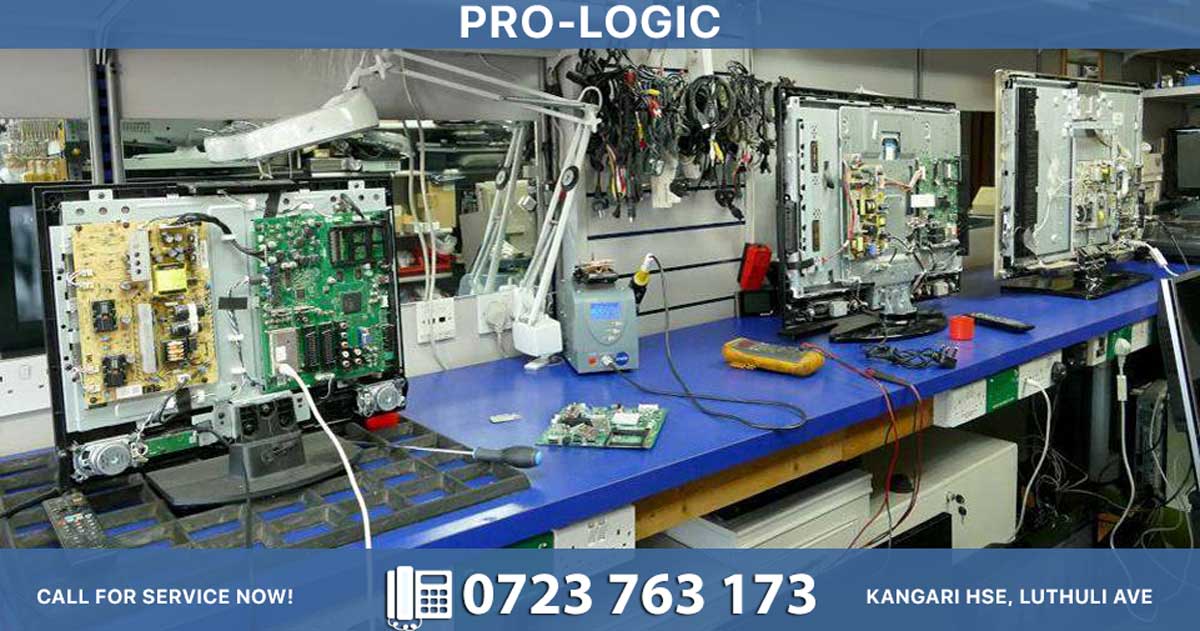
Workshop Setup Essentials
- Workbenches and Storage – Have a clean and organized workspace for repairs.
- Essential Tools – Acquire necessary repair tools such as screwdrivers, multimeters, soldering irons, and circuit testers.
- Spare Parts Inventory – Stock commonly used TV parts like power supply boards, LED strips, capacitors, and remote controls.
- Customer Waiting Area – If space allows, provide a small waiting area with seats for customers.
A well-organized workshop improves efficiency and builds customer confidence in your services.
Step 5: Invest in Quality Tools and Spare Parts
Having the right tools ensures you can handle various TV repair jobs effectively. Some essential tools include:
- Digital Multimeter – For testing circuits and diagnosing electrical issues.
- Soldering Kit – For fixing loose or damaged components on circuit boards.
- Screwdrivers and Pliers – For opening TVs and making repairs.
- Hot Air Rework Station – Useful for handling delicate electronic components.
- Software Flashing Tools – Needed for updating and repairing Smart TV software issues.
You can buy repair tools and spare parts from electronic shops in Nairobi’s Luthuli Avenue, River Road, or online platforms like Jumia and Kilimall.
Step 6: Market Your TV Repair Business
Marketing is essential to attract customers and grow your business. Some effective marketing strategies include:
- Online Advertising – Create a Facebook page, Instagram profile, and Google My Business listing to reach more clients.
- Word-of-Mouth Referrals – Offer quality services so that satisfied customers can recommend you to others.
- Business Cards and Flyers – Distribute business cards and flyers in your neighborhood, electronic shops, and local supermarkets.
- Partnerships with Electronic Shops – Collaborate with TV retailers to offer repair services to their customers.
- Offer Home Repair Services – Many customers prefer home repair services, especially for large TVs.
Providing excellent customer service and maintaining a good reputation will help you attract repeat customers and referrals.
Step 7: Set Competitive Pricing
Pricing should be based on the type of repair and the complexity of the work involved. Below is a general guideline for TV repair charges in Kenya:
| Repair Type | Estimated Cost (Ksh) |
|---|---|
| Power Issues | 1,500 – 3,500 |
| Screen Repair/Replacement | 5,000 – 20,000 |
| Sound Problems | 1,500 – 4,000 |
| Smart TV Software Issues | 2,000 – 5,000 |
| LED Backlight Repair | 3,000 – 8,000 |
Offering fair and transparent pricing will build trust with customers.
Step 8: Provide Excellent Customer Service
Customer satisfaction is key to growing your business. To build a strong reputation:
- Be Honest and Transparent – Explain repair costs upfront and avoid hidden charges.
- Offer Warranty on Repairs – Providing a short warranty (e.g., 30 days) can assure customers of quality service.
- Respond Quickly to Inquiries – Answer calls and messages promptly.
- Keep Customers Updated – Inform clients about the progress of their TV repairs.
Good customer service increases repeat business and referrals.
Step 9: Expand Your Services
As your business grows, consider expanding your services to increase revenue. Some additional services include:
- Home Theater and Audio System Repair – Many customers need repairs for speakers and amplifiers.
- Satellite Dish and Decoder Installation – Offer installation and repair services for DStv, Startimes, and Zuku decoders.
- Selling TV Accessories – Stock and sell remotes, HDMI cables, power adapters, and wall mounts.
- Smart TV Software Updates – Help customers update their TV firmware and install useful apps.
Expanding your services can increase your income and customer base.
Starting a successful TV repair business in Kenya requires technical skills, proper planning, and effective marketing. By acquiring the right training, registering your business, setting up a well-equipped workshop, and providing excellent customer service, you can build a profitable and sustainable venture.
With the rising demand for TV repair services, this business presents a great opportunity for those willing to invest time and effort. If you are passionate about electronics and problem-solving, TV repair can be a rewarding and financially stable career