Need TV Repair Services in Nairobi?
Certified technicians dispatched to you — same day.
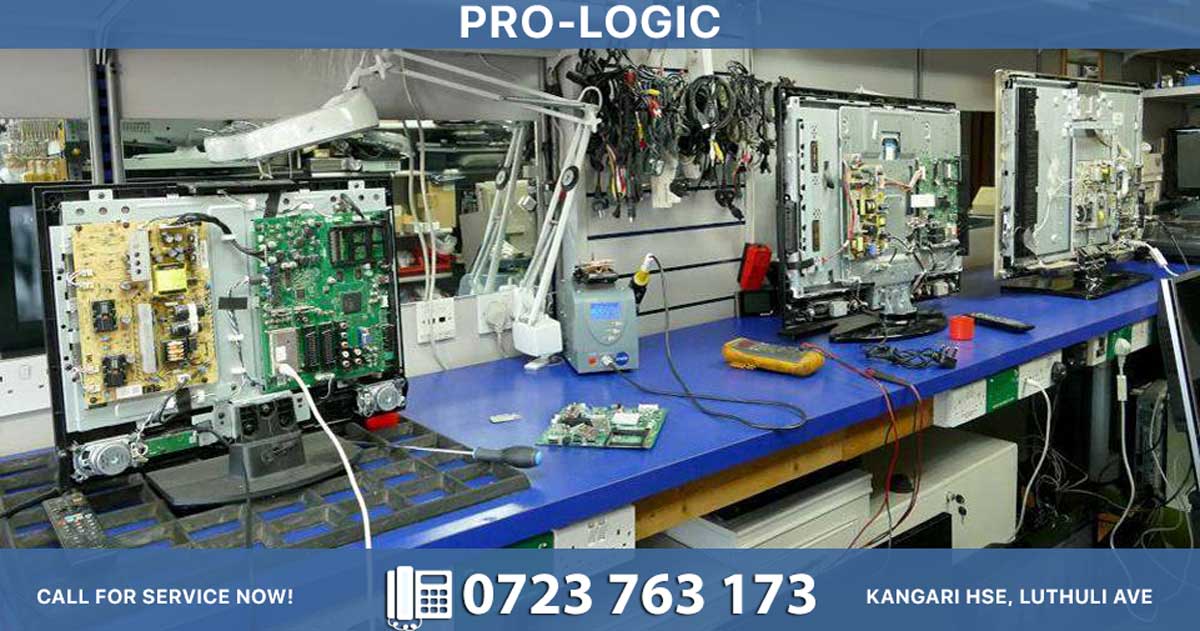
A very dim or almost black screen on an LED TV is typically a sign of backlight failure. LED TVs use a backlight to illuminate the LCD panel, which itself does not produce light. If the backlight fails, the panel cannot display a visible image, resulting in a dim or black appearance. The most common cause is a failure in the LED strips that provide the backlight. These strips can burn out over time, especially if the TV is used for extended periods at high brightness levels. Individual LEDs or entire strips can fail, leading to a gradual or sudden dimming of the screen.
Another possible cause is a faulty backlight driver or inverter board. This board controls the power and brightness of the LED strips. If the driver fails, it may not provide sufficient power to the LEDs, causing the backlight to dim or turn off entirely. Symptoms of a failing driver include flickering, inconsistent brightness, or the TV taking longer to turn on. Inspect the driver board for visible signs of damage, such as burned components or bulging capacitors. If damage is evident, the board likely needs replacement.
The power supply board can also affect backlight performance. If the power supply does not provide the correct voltage to the backlight driver, the LEDs may not function properly. A failing power supply can cause a variety of issues, including dim screens, random shutdowns, or failure to turn on. Check the power supply for signs of damage, such as burn marks or leaking capacitors. If the power supply is faulty, it may need to be replaced.
Software or settings issues can sometimes cause the screen to appear dim. Check the TV picture settings for brightness, contrast, and backlight controls. Ensure these are set to appropriate levels. Some TVs have an energy-saving mode that reduces backlight brightness to conserve power. Disable this mode to see if the screen brightens. Additionally, some picture modes, such as Cinema or Movie, use lower brightness settings to create a more theater-like experience. Switch to a different mode, such as Standard or Dynamic, to increase brightness.
The LCD panel itself can also cause dimness, though this is less common. If the panel or its polarizing filters are damaged, it may not transmit light effectively, resulting in a dim image. This type of damage is usually permanent and requires panel replacement, which is often not cost-effective. If the dimness is accompanied by other issues, such as lines, distortion, or color problems, the panel may be the cause.
To confirm backlight failure, perform the flashlight test. In a dark room, shine a flashlight at an angle on the screen while the TV is on. If you can see a faint image, the backlight is likely the issue. If there is no image at all, the problem may be with the panel or another component. For backlight issues, professional repair is usually required, as accessing and replacing the LED strips or driver board involves disassembling the TV and handling delicate components.