Need TV Repair Services in Nairobi?
Certified technicians dispatched to you — same day.
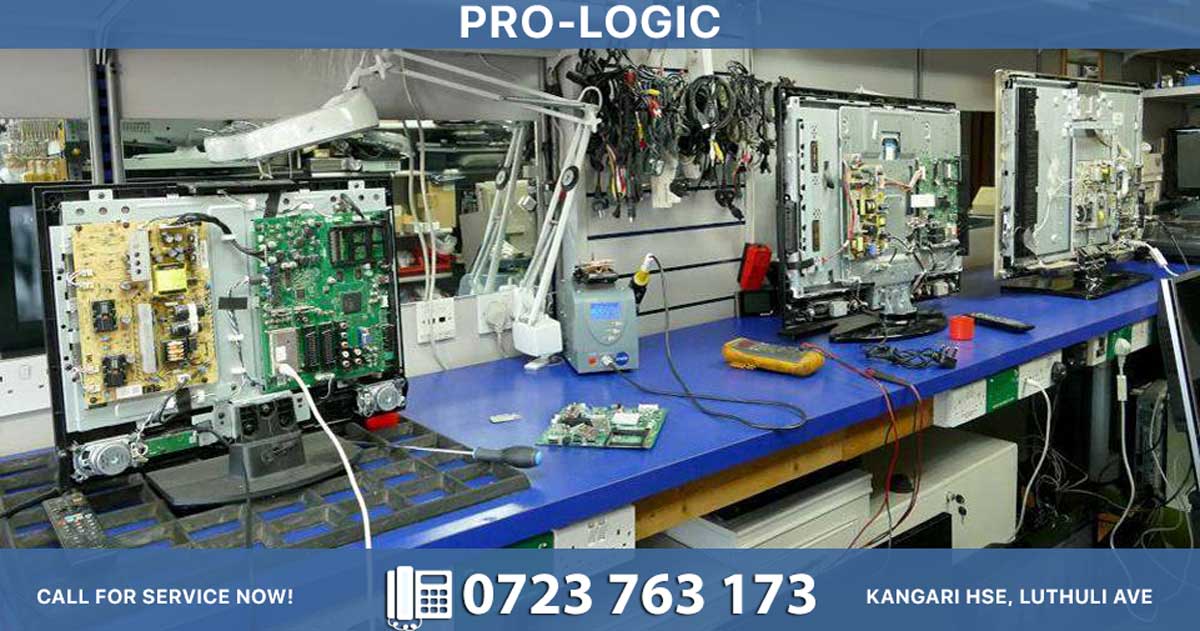
Few faults frustrate television viewers in Nairobi as much as audio that cuts in and out without warning. You settle down to watch the evening news or a football match, and suddenly the sound vanishes for a few seconds, then returns, only to disappear again moments later. Intermittent audio loss is a widely reported TV repair problem in Kenya, and understanding its causes helps you decide between a simple home fix and professional television repair in Nairobi.
Common Causes of Intermittent Audio Loss
-
Loose or damaged cable connections. The most frequent cause is a loose HDMI cable, worn aux cable, or a faulty speaker wire. When a cable sits loosely in its port, the audio signal drops each time the connection is disturbed. Reseating or replacing cables often resolves the fault immediately.
-
Damaged speakers or speaker cones. Over time, especially in dusty environments, speaker cones stiffen, tear, or detach from their terminals. A partially disconnected speaker produces sound that fades in and out, particularly at higher volumes.
-
Software and firmware glitches. Smart televisions run complex audio-processing software. An outdated firmware version, a corrupted app, or a conflict between the TV's internal audio decoder and an external sound system can cause sound dropout. A factory reset or firmware update frequently corrects the issue.
-
Failing audio IC or amplifier circuit. Inside the television, the audio amplifier integrated circuit drives the speakers. If this component is overheating or partially failing, sound cuts out intermittently, often accompanied by a faint crackling noise.
-
External device faults. Decoders, soundbars, home theatre systems, and gaming consoles connected to the TV can themselves be the source. If audio only drops when using one particular source, the problem lies with that device or its cable, not the television.
-
Overheating. Televisions mounted in enclosed spaces or against walls without ventilation can overheat. Heat-sensitive solder joints on the audio circuit expand and contract, causing sound interruption until the set cools down.
Quick Troubleshooting Steps
Before seeking repair, test the TV's internal tuner with a different source, switch to another HDMI port, disconnect all external audio devices, and perform a factory reset. If the sound still cuts out using the built-in speakers at moderate volume, an internal fault is confirmed.
Prevention Tips
To reduce the risk of recurring audio faults, connect your television to a quality surge protector, especially in neighborhoods prone to voltage instability. Keep the vents free of dust by wiping the back panel regularly, and avoid running the volume at maximum for extended periods, which stresses both the speakers and the amplifier circuit. Mounting the set away from direct sunlight and humidity also protects the audio components from premature aging.
Where to Fix Intermittent Audio Loss in Nairobi
For professional diagnosis and repair, televisionrepair.co.ke offers trusted TV repair services in Nairobi for all major brands, including Samsung, LG, Sony, TCL, Hisense, and Philips. Their skilled technicians accurately trace audio faults, replace damaged speakers, repair amplifier circuits, and update firmware at fair prices. The workshop is located on Luthuli Avenue, the well-known electronics repair hub of Nairobi CBD, allowing convenient drop-off and walk-in consultation. To book a repair or request a cost estimate, call 0723763173. Timely professional attention restores your sound quickly and extends the life of your television.
No Sound but Picture Works: Causes and Where to Fix in Nairobi
A television that displays a perfect picture but produces no sound at all is a common complaint handled by TV repair technicians in Nairobi. The screen functions normally, menus respond, and channels tune in correctly, yet the audio remains completely silent. This fault, sometimes described as a "no audio" fault, has several possible origins, ranging from simple settings errors to genuine hardware failure.
Common Causes of a Silent TV with a Working Picture
-
Muted or misconfigured audio settings. Before anything else, confirm that the TV is not muted, that the volume is turned up, and that the audio output is set to "TV speakers" rather than an external output such as HDMI ARC, optical, or Bluetooth. Many silent-TV cases traced in Nairobi repair workshops turn out to be incorrect audio output settings.
-
Wrong channel or source configuration. Some sources carry no audio at all. For example, a decoder left on a radio-only channel or a muted external device can make the television appear faulty when it is not.
-
Blown or disconnected speakers. Speaker coils can burn out after a power surge, or the internal speaker connectors can detach, silencing the set entirely. The picture remains unaffected because the display and audio systems are separate circuits.
-
Faulty audio amplifier or sound IC. The amplifier chip that drives the speakers can fail completely, often after a lightning strike or unstable voltage. The picture works because the power supply to the main board survives, while the dedicated audio circuit does not.
-
Firmware corruption. On smart TVs, corrupted firmware can disable the audio subsystem. A firmware update or a full factory reset occasionally revives the sound without any hardware work.
-
Aging solder joints. Heat cycles inside the television gradually weaken solder connections on the audio circuit. Eventually a joint cracks completely, cutting all sound while leaving the picture intact.
Troubleshooting Before Calling a Technician
Test multiple sources, check audio settings in the menu, disconnect all external devices, and perform a factory reset. If the television remains silent on every channel and source through its built-in speakers, the fault is internal and requires workshop diagnosis.
Prevention Tips
Protecting your television's audio system starts with stable power. Use a surge protector or uninterruptible power supply, since lightning-induced surges are a leading destroyer of amplifier circuits in Kenya. Keep the internal speakers dry and dust the back panel often, as accumulated dust traps heat around the audio components. Finally, resist the habit of pushing volume to the maximum; sustained high output overheats speaker coils and shortens their working life considerably.
Where to Fix a No-Sound TV in Nairobi
Televisionrepair.co.ke provides professional TV sound repair in Nairobi, handling speaker replacement, amplifier repair, audio IC replacement, and firmware restoration for Samsung, LG, Sony, TCL, Hisense, and other brands. The technicians use genuine replacement parts and offer reasonable prices. Visit the workshop on Luthuli Avenue in Nairobi CBD, or call 0723763173 to describe the fault and receive a cost estimate. Prompt attention ensures you return to full entertainment without replacing the whole set.
Picture Works but Audio Is Distorted: Causes and Where to Fix in Nairobi
Distorted television audio is among the most annoying TV faults reported in Nairobi. The picture may be crisp and clear, but the sound arrives crackling, muffled, buzzing, or harsh. Audio distortion can develop gradually or appear suddenly after a power surge, and it affects both ordinary digital TVs and modern smart televisions. Identifying the underlying cause determines whether a settings change or professional repair is required.
Common Causes of Distorted TV Audio
-
Speaker damage. The most frequent cause is a damaged speaker cone or suspension. Dust, age, moisture, and excessive volume weaken the cone material, producing buzz or rattle, especially at bass-heavy moments. A torn cone cannot be repaired reliably and usually requires speaker replacement.
-
Blown speaker coils. After a voltage surge, the copper coil inside a speaker can overheat and deform. The result is muffled, distorted sound even at low volume, often more severe on one side of the TV.
-
Overdriven amplifier. If the audio amplifier IC is failing, it clips the signal before it reaches the speakers, generating harsh, gritty distortion. Amplifier faults commonly worsen as the television warms up.
-
Incorrect audio settings. Excessive bass or treble boost, simulated surround modes, or volume-leveling features can introduce distortion on certain content. Restoring the default sound profile frequently clears the problem.
-
Faulty external devices. Soundbars, decoders, and home theatre systems connected by HDMI or aux cables can distort audio when the source signal is too strong or the cable is damaged. Testing the TV's internal speakers isolates whether the fault is internal or external.
-
Power supply irregularities. Unstable mains voltage or a weakening power board starves the audio circuit of clean current, causing hum, hiss, and intermittent distortion. This is common in areas of Nairobi experiencing voltage fluctuations.
-
Moisture ingress. Humidity can corrode speaker terminals and audio circuit contacts, gradually degrading sound quality until distortion becomes constant.
Steps to Identify the Fault
Play audio at low volume through the built-in speakers, disable all audio effects, test a different channel or app, and disconnect external sound equipment. If distortion persists, the fault is inside the television and requires qualified technicians.
Prevention Tips
Distortion develops more slowly on well-maintained televisions. Keep volume below the distortion threshold, because overdriving speakers permanently deforms the cones. Invest in a voltage stabilizer if your area suffers frequent power fluctuations, as clean power preserves the amplifier circuit. Dust the vents monthly and ensure at least ten centimeters of clearance around the television for airflow. These simple habits delay audio degradation and keep dialogue and music sounding clear for years.
Where to Fix Distorted TV Audio in Nairobi
For reliable TV audio repair in Nairobi, televisionrepair.co.ke offers expert diagnosis and repair of distorted sound on all major brands, including Samsung, LG, Sony, TCL, and Hisense. Their experienced technicians replace speakers, repair amplifier circuits, and resolve power-related audio faults using genuine parts at affordable prices. The workshop is located on Luthuli Avenue in Nairobi CBD, making it convenient for drop-off and pickup. Call 0723763173 to book a repair or request a free cost estimate, and enjoy clear, undistorted sound once again.
Remote Control Responds Slowly or Erratically: Causes and Where to Fix in Nairobi
A remote control that responds slowly, intermittently, or erratically turns the simple pleasure of watching television into a frustrating exercise. You press a button and nothing happens, then press again and the channel jumps twice. This common TV fault in Nairobi affects televisions of every brand and age, and it can originate from the remote itself, the television's sensor, or internal board faults.
Common Causes of Slow or Erratic Remote Response
-
Weak or corroded batteries. The most frequent cause is depleted batteries. As voltage drops, the remote transmits a weak infrared signal that the TV receives inconsistently, producing delayed or missed commands. Leaking batteries also corrode the contacts, blocking current entirely.
-
Blocked or dirty infrared sensor. The infrared receiver on the television must have a clear line of sight to the remote. Dust on the sensor, a soundbar placed in front of the TV, or bright sunlight flooding the room can interfere with signal reception and delay responses.
-
Damaged remote buttons. Conductive pads under the buttons wear out with years of use, particularly on the power and volume keys. Worn pads require multiple presses or harder pressure before registering, which users experience as sluggish behavior.
-
Faulty infrared receiver on the TV. The receiver diode on the television's control board can partially fail, especially after a power surge. The TV then responds only when the remote is held very close, or ignores commands randomly.
-
Main board or software faults. On smart televisions, the software that processes remote commands can lag when the processor is overloaded by background apps. Slow response may be a symptom of firmware problems rather than remote failure.
-
Interference from other devices. Some LED lighting, decoders, and wireless equipment emit infrared or electrical noise that confuses the TV's sensor, causing erratic behavior at certain times of day.
Troubleshooting Before Seeking Repair
Replace the batteries with fresh ones, clean the remote's infrared LED and the TV's sensor window, test the remote using a phone camera to confirm it flashes when buttons are pressed, and point the remote directly at the sensor from close range. If a known-good replacement remote also behaves erratically, the fault lies within the television itself.
Prevention Tips
Extend the life of both remote and receiver with a few habits. Replace batteries in pairs as soon as response slows, and remove batteries if the remote will be unused for months, preventing corrosive leaks. Keep the infrared sensor window dusted and avoid placing decoders or soundbars directly in front of it. Handle the remote gently rather than dropping it, since hairline cracks in the internal circuit board are a common cause of erratic behavior.
Where to Fix Remote Response Faults in Nairobi
Televisionrepair.co.ke offers professional TV repair in Nairobi for remote control faults, infrared sensor replacement, and main board diagnosis on all major brands, including Samsung, LG, Sony, TCL, and Hisense. Their technicians also supply and program replacement remotes at competitive prices. Visit the workshop on Luthuli Avenue in Nairobi CBD for walk-in diagnosis, or call 0723763173 to book a repair and receive a cost estimate. Accurate diagnosis ensures you do not discard a functioning remote unnecessarily.
HDMI and USB Ports Stop Working: Causes and Where to Fix in Nairobi
Dead HDMI and USB ports are a frequent complaint at TV repair workshops in Nairobi. You connect a decoder, gaming console, flash disk, or soundbar, and the television fails to detect it, displays "no signal," or refuses to read files. Because modern entertainment depends heavily on these connections, non-working ports can render a television almost useless.
Common Causes of Failed HDMI and USB Ports
-
Damaged port hardware. Ports are physical components, and repeated insertion and removal wears out their contacts. Bent pins, cracked solder joints, or a loose port housing produce unreliable or absent connections.
-
Faulty HDMI port solder connections. The HDMI ports attach to the main board through solder joints that endure mechanical stress every time a cable is plugged in. Over time these joints crack, and the port dies while the rest of the TV functions normally.
-
Main board failure. HDMI and USB ports are managed by the television's main board. When the board's input controller circuit fails, often after a power surge, one or several ports stop working simultaneously.
-
Firmware corruption. Smart televisions rely on software to detect and manage connected devices. Corrupted firmware can disable port detection, a fault sometimes resolved by a firmware update or factory reset.
-
HDCP handshake failures. HDMI connections perform a digital handshake between devices. When this handshake fails due to an aging cable or incompatible firmware, the screen shows "no signal" even though the hardware is healthy.
-
Short-circuited devices. A faulty flash disk or console with an internal short can damage the port it is plugged into, and in some cases, harm the main board itself. This is why technicians test ports with known-good devices.
-
Dust and moisture ingress. Dust accumulation or moisture inside the port housing, common in coastal and humid environments, causes poor contact and intermittent detection.
How to Diagnose Port Failures
Test each port with a known-good cable and device, try different ports on the same TV, update the firmware, and perform a factory reset. If all ports remain dead while the television otherwise operates normally, the main board input circuit is likely at fault.
Prevention Tips
Ports survive longer with careful handling. Insert cables straight and firmly without wiggling, and avoid unplugging devices while the television is powered on. Invest in quality HDMI cables, as cheap cables with loose connectors accelerate port wear. Never force a USB stick into a port; misalignment bends contact pins instantly. Keeping the ports dusted and covered when unused also maintains reliable contact and prevents intermittent detection problems.
Where to Fix Failed Ports in Nairobi
For dependable HDMI and USB port repair in Nairobi, televisionrepair.co.ke provides expert port replacement, solder repair, and main board diagnosis for Samsung, LG, Sony, TCL, Hisense, and other brands. Their skilled technicians use genuine components and charge reasonable prices for component-level repairs. The workshop sits on Luthuli Avenue in Nairobi CBD, convenient for drop-off and same-day assessment. Call 0723763173 to book a repair or request an estimate before visiting.
Wi-Fi and Smart Features Keep Failing: Causes and Where to Fix in Nairobi
Smart televisions have become the entertainment centerpiece of many Nairobi homes, but when Wi-Fi disconnects repeatedly and smart features fail, the set loses much of its value. Streaming apps refuse to load, the TV drops off the network, and screen mirroring stops working. This fault, common on Samsung, LG, TCL, Hisense, and Sony smart TVs, has several distinct origins worth understanding.
Common Causes of Failing Wi-Fi and Smart Features
-
Wi-Fi module failure. Smart televisions contain a dedicated Wi-Fi module that communicates with your router. This module can fail or develop dry solder joints, especially after heat buildup or power surges, resulting in repeated disconnection and "network not found" errors.
-
Weak or congested home network. Sometimes the television is healthy but the network is not. A router placed far from the TV, thick walls, interference from neighbors' networks, or too many connected devices causes buffering and disconnects that mimic hardware failure.
-
Firmware problems. Outdated or corrupted firmware is a leading cause of smart feature failure. Apps crash, the app store disappears, and network settings grey out. Manufacturers periodically release updates that fix known connectivity bugs.
-
Router configuration issues. DHCP conflicts, outdated router firmware, or blocked MAC addresses can prevent the TV from holding a stable connection. Restarting the router and the TV resolves many temporary conflicts.
-
Overloaded television memory. Smart TVs have limited internal storage. When memory fills with apps and cached data, the entire smart platform slows down, and network functions become unstable.
-
Failing main board. In some cases, the television's main board, which hosts the smart platform and network controller, degrades. Persistent failures across all apps and networks point to this deeper hardware fault.
Troubleshooting Steps to Try First
Restart the router and the television, forget and rejoin the Wi-Fi network, update the TV's firmware, clear app caches, and test the connection with a LAN cable if possible. If the TV fails on multiple networks while other devices connect normally, the internal Wi-Fi hardware is faulty.
Prevention Tips
Smart feature reliability depends heavily on power quality and maintenance. Plug your television into a surge protector to shield the sensitive Wi-Fi module from voltage spikes, and keep firmware updated as manufacturers release stability fixes. Position the router centrally and away from thick walls to strengthen the signal reaching the set. Allow adequate ventilation around the TV, because the wireless module is among the first components to suffer when internal temperatures rise.
Where to Fix Smart TV Wi-Fi Faults in Nairobi
Televisionrepair.co.ke specializes in smart TV repair in Nairobi, covering Wi-Fi module replacement, firmware reflashing, main board repair, and smart platform restoration for all major brands. Their experienced technicians diagnose whether the fault lies with the TV or the home network and offer genuine parts at fair prices. The workshop is located on Luthuli Avenue in Nairobi CBD, with convenient walk-in service. Call 0723763173 to book a diagnostic appointment and restore your smart features. Their technicians also advise on router placement and network configuration so connectivity remains stable long after the repair is completed.
Apps Crash Constantly on Your Smart TV: Causes and Where to Fix in Nairobi
Few things interrupt streaming in Nairobi homes like an app that crashes mid-episode. YouTube closes unexpectedly, Netflix returns to the home screen, or the app store refuses to open at all. Constant app crashing is a widely reported smart TV fault, and while it is often software-related, persistent crashes can indicate deeper hardware problems.
Common Causes of Constantly Crashing Apps
-
Insufficient memory. Smart televisions have limited RAM and storage. As apps grow heavier with each update, older TVs run out of working memory, forcing apps to close unexpectedly. Clearing caches and uninstalling unused apps provides temporary relief.
-
Corrupted app data. A failed update or an interrupted download leaves corrupted files on the TV's storage. The affected app then crashes each time it tries to open. Reinstalling the application usually clears the corruption.
-
Outdated firmware. Television operating systems depend on firmware that manufacturers update regularly. Running an old version causes compatibility problems with newer app releases, producing crashes on otherwise healthy sets.
-
Unstable internet connection. Streaming apps crash when the network drops mid-session. If the TV's Wi-Fi module is weak or the home network is congested, apps terminate abruptly and may appear broken when the connection is the true culprit.
-
Failing internal storage. The flash memory chip inside the TV can degrade with age and heat. When storage sectors fail, apps and system files become unreadable, causing widespread crashing across multiple applications.
-
Main board faults. The processor and memory chips live on the main board. Overheating, power surges, and age-related component failure degrade these circuits, and one of the first symptoms is software instability and app crashes.
-
Overheating. A TV mounted in an enclosed cabinet or pressed against a wall cannot dissipate heat. Prolonged high temperatures destabilize the processor, causing apps to crash more frequently as the set warms up.
What to Try Before Seeking Repair
Update the firmware to the latest version, delete and reinstall the affected apps, clear caches, free storage by removing unused applications, and perform a factory reset. If crashing continues across all apps after a reset, the storage chip or main board is likely failing.
Prevention Tips
A well-maintained smart platform crashes far less often. Keep at least ten percent of internal storage free by removing apps you no longer use, and clear caches periodically through the settings menu. Install firmware updates promptly, since manufacturers continually patch stability bugs. Guard against power surges with a quality protector, and never mount the television in an enclosed cabinet without airflow, because heat is the quiet destroyer of processors and memory chips alike.
Where to Fix App Crashing Problems in Nairobi
Televisionrepair.co.ke offers professional smart TV repair in Nairobi for app crashing, storage chip replacement, firmware reflashing, and main board repair on Samsung, LG, Sony, TCL, and Hisense models. Their qualified technicians distinguish software faults from hardware failure, saving you the cost of unnecessary replacements, and they charge reasonable prices with genuine parts. The workshop is on Luthuli Avenue in Nairobi CBD, easily accessible for drop-off. Call 0723763173 to book a repair or discuss your symptoms.
Frozen Menus or Interface: Causes and Where to Fix in Nairobi
A television with a frozen menu or unresponsive interface is effectively unusable. The picture may continue playing in the background, but the settings menu hangs, the home screen refuses to load, or the entire interface locks up until the set is unplugged. Interface freezing is a common smart TV fault in Nairobi, reported on Samsung, LG, TCL, Hisense, Sony, and other brands, and it has several identifiable causes.
Common Causes of a Frozen TV Interface
-
Software overload. Smart televisions are small computers. When too many apps run in the background, the processor and memory become exhausted, and the interface stops responding. This is the most frequent cause on budget smart TVs with limited RAM.
-
Corrupted firmware. An interrupted update, a power cut during installation, or a failed download can corrupt the television's operating system. The result is an interface that hangs on startup, freezes during navigation, or restarts in a loop.
-
Failing internal storage. The flash memory that holds the operating system and apps degrades over years of use. When sectors fail, the system reads files slowly or incorrectly, and menus lag severely or freeze completely.
-
Main board failure. The processor and memory chips reside on the main board. Heat stress, power surges, and component aging degrade these circuits, producing an interface that slows down, freezes, or refuses to respond to the remote or buttons.
-
Overheating. A television enclosed in a cabinet, mounted flush against a wall, or sitting in direct sunlight cannot release the heat generated by its processor. As temperatures climb, the system throttles and eventually freezes until it cools.
-
Remote or control panel faults. Occasionally the interface is healthy but the input system is not. A failed remote, a stuck control button on the television's own panel, or a faulty infrared receiver makes the TV appear frozen when it is simply receiving no commands.
Troubleshooting Steps to Try First
Unplug the television for five minutes to clear the memory, then power it on again. Disconnect all USB devices, update the firmware if the menu responds long enough, uninstall unused apps, and perform a factory reset. If the interface still freezes after a reset, the fault lies in the storage chip or main board.
Prevention Tips
Prevent interface freezes by keeping firmware updated, limiting the number of installed applications, and clearing cached data monthly. Protect the set with a surge protector, since corrupted firmware often begins with a power cut during an update. Mount the television with generous ventilation space, and avoid running heavy streaming apps for uninterrupted marathon hours, which drives internal temperatures to levels that destabilize the system.
Where to Fix a Frozen TV Interface in Nairobi
For professional smart TV repair in Nairobi, televisionrepair.co.ke provides expert diagnosis and repair of frozen interfaces, firmware reflashing, storage chip replacement, and main board repair for all major brands. Their qualified technicians use genuine components and charge reasonable prices, restoring responsiveness without the cost of a new television. The workshop is located on Luthuli Avenue in Nairobi CBD, with convenient walk-in service and fast turnaround. Call 0723763173 to book a repair or request a cost estimate.
Overheating: Excessive Heat from TV Vents: Causes and Where to Fix in Nairobi
Television manufacturers design their sets to run warm, but a TV that blows noticeably hot air, becomes uncomfortable to touch near the vents, or shuts down on its own is overheating. Excessive heat is one of the most destructive TV faults seen in Nairobi workshops because it damages multiple internal components at once, shortening the life of the power board, main board, and backlight system.
Common Causes of TV Overheating
-
Blocked ventilation. The leading cause is poor installation. A television mounted flush against a wall, enclosed in a cabinet, or placed near curtains traps the hot air its own components generate. Without airflow, temperatures climb rapidly with each hour of viewing.
-
Dust accumulation. Dust settles on the vents, fans, and internal boards, forming an insulating blanket that blocks heat transfer. Nairobi's dusty dry-season conditions make regular cleaning essential, especially for wall-mounted sets that are rarely moved.
-
Failing capacitors. Capacitors on the power board deteriorate with age. As they lose efficiency, they generate more heat while delivering less stable power, warming the entire chassis and accelerating the failure of surrounding components.
-
Backlight strain. LED backlights generate significant heat. When backlight strips begin to fail, the driving circuit works harder, and the backlight inverter becomes a concentrated heat source inside the panel assembly.
-
Prolonged high-brightness operation. Running the screen at maximum brightness for many hours, common in brightly lit living rooms, raises power consumption and internal temperatures well beyond typical levels.
-
Failing internal fans. Some larger televisions include cooling fans. When a fan's bearing wears out or dust jams its blades, airflow stops and heat builds up quickly around the main board.
-
Ambient temperature. A television operating in a room that is already hot, in direct sunlight, or near other heat-generating equipment starts from a disadvantage and reaches critical temperatures sooner.
Warning Signs to Take Seriously
Watch for a chassis that is hot to the touch near the top vents, an image that dims after extended viewing, unexpected shutdowns, a faint burning odor, or slower smart features as the set warms. Each symptom signals that heat is already stressing the internal electronics.
Prevention Tips
Prevent overheating by leaving at least ten centimeters of clearance around the television, dusting the vents monthly with a soft brush, and avoiding enclosed cabinets without ventilation holes. Lower the brightness to a comfortable but moderate level, switch the set off when not in use, and keep it out of direct sunlight. A surge protector also spares the power board from surge-related stress that generates excess heat.
Where to Fix Overheating TVs in Nairobi
Televisionrepair.co.ke offers professional TV overheating repair in Nairobi, including internal cleaning, fan replacement, capacitor replacement, power board repair, and backlight diagnostics for Samsung, LG, Sony, TCL, Hisense, and other brands. Their experienced technicians identify the heat source precisely and restore safe operating temperatures at fair prices. Visit the workshop on Luthuli Avenue in Nairobi CBD, or call 0723763173 to book a service appointment before heat causes permanent damage.
Burning Smell from Your TV: Causes and Where to Fix in Nairobi
A burning smell from a television should never be ignored. Unlike a flickering screen or failed sound, a burning odor signals active electrical stress or component failure that can escalate within minutes. Viewers in Nairobi who notice a sharp, acrid, or smoky smell from their TV should switch it off and unplug it immediately, then read on to understand what the fault might involve.
Common Causes of a Burning Smell
-
Failing capacitors. Electrolytic capacitors on the power board are the usual first victims. As they age or suffer voltage surges, they bulge, leak, and vent a sharp chemical smell. A leaking capacitor also destabilizes the power supply, threatening the entire television.
-
Overheating transformer or coil. The power supply contains transformers and inductor coils. When insulation on their windings degrades from heat or surges, the varnish burns, producing a hot, electrical odor often noticed before any visible symptom appears.
-
Dust burning on hot components. A thick layer of internal dust can scorch when it settles on heatsinks and power resistors. The resulting smell resembles burning dust and serves as a warning that ventilation is already compromised.
-
Shorted backlights or wiring. A failing LED strip or a pinched internal wire draws excessive current, heating the surrounding area and melting insulation, which emits a plastic burning smell. This fault carries a genuine fire risk if the set stays powered.
-
Resistor or IC failure. Power resistors and integrated circuits sometimes fail dramatically, scorching the circuit board around them. The smell is acrid and distinctive, and a visible brown or black mark often confirms the location.
-
Surge damage. After a lightning strike or major power fluctuation, several components may be partially damaged. The smell appears when the television is next powered on as the weakened parts finally give way.
What to Do When You Smell Burning
Switch off the television at the wall immediately and unplug it. Do not attempt to power it on repeatedly to test. Note whether the smell is strongest near the vents, and check the socket and extension cable too, since faulty house wiring and cheap extension boards sometimes produce the odor rather than the TV itself. The set requires professional inspection before any further use.
Prevention Tips
Protect against burning components with a quality surge protector or stabilizer, which absorbs voltage spikes before they reach the power board. Schedule internal cleaning every year or two, since dust is both an insulator and a fuel source. Never leave the television powered on unattended for very long periods, and replace aging extension cables and wall sockets, which are common ignition points in many Nairobi homes.
Where to Fix Burning-Smell TV Faults in Nairobi
For urgent, professional television repair in Nairobi, televisionrepair.co.ke provides expert diagnosis of burning smells, power board repair, capacitor replacement, short-circuit tracing, and surge-damage restoration for all major brands. Their qualified technicians locate the damaged component, confirm the board is safe to reuse, and use genuine replacement parts at reasonable prices. Visit the workshop on Luthuli Avenue in Nairobi CBD, or call 0723763173 promptly for an assessment.
Chemical or Plastic Odor from Your TV: Causes and Where to Fix in Nairobi
A chemical or plastic odor coming from a television can be unsettling. New televisions sometimes smell faintly of plastic for their first weeks, but a mature set that suddenly develops a chemical odor is communicating that something inside is heating beyond its design limits or breaking down. Nairobi TV technicians trace these smells to a short list of internal faults, and early identification prevents costly damage.
Common Causes of Chemical or Plastic Odors
-
Overheating plastic components. Internal wiring, connectors, and board substrates are insulated with plastics. When a component nearby overheats, these plastics soften and off-gas a warm chemical smell long before they melt or scorch. This is often the earliest warning of a failing power board.
-
Degraded insulation on transformers. The varnish that insulates transformer windings breaks down under prolonged heat stress, releasing a varnish-like chemical odor. A transformer at this stage continues working but is approaching failure.
-
Leaking electrolytic capacitors. A vented capacitor releases its electrolyte, which smells sharply chemical, slightly sweet, and unmistakably synthetic. The leak also corrodes nearby copper traces, so prompt repair limits board damage.
-
Burning dust and debris. Insects, dust, and occasionally small geckos find their way into television vents. When debris settles on hot heatsinks, it produces an acrid plastic-like smell and, in unfortunate cases, visible smoke.
-
Glue and thermal paste breakdown. Manufacturers secure large components with adhesives and thermal compounds. Years of heat cycles harden and crack these materials, and near the end of their life they emit mild chemical smells that intensify during long viewing sessions.
-
Shorted components. A partially shorted diode, resistor, or MOSFET runs far hotter than intended, cooking the board laminate around it. The resulting odor resembles burnt plastic and usually accompanies an actual scorch mark on the circuit board.
Distinguishing Normal from Dangerous Smells
A faint plastic smell from a new television during its first weeks is normal and fades. A new, strong, or intensifying odor from an older set is not. If the smell appears only after extended viewing, appears together with hot vents or dimming, or grows stronger over days, treat it as a developing internal fault and stop using the set until it is inspected.
Prevention Tips
Limit odor-causing stress by keeping the vents clear and dusting them monthly. Use a surge protector to shield the power board from voltage spikes that crack component insulation. Avoid placing the television inside closed cabinets, and never drape cloths over the top vents. Running the set at moderate brightness and switching it off overnight reduces the heat cycles that gradually break down insulation, adhesives, and capacitors.
Where to Fix Odor Faults in Nairobi
Televisionrepair.co.ke provides professional TV repair in Nairobi for chemical and plastic odors, covering power board inspection, capacitor replacement, transformer repair, short-circuit tracing, and full internal cleaning on Samsung, LG, Sony, TCL, Hisense, and other brands. Their experienced technicians locate the exact source of the smell and restore safe operation using genuine parts at fair prices. The workshop is located on Luthuli Avenue in Nairobi CBD. Call 0723763173 to book an inspection before the fault escalates.
Static Electricity Shocks from the TV Frame: Causes and Where to Fix in Nairobi
A small snap of static electricity from a television frame startles most viewers, but repeated or noticeable shocks from a TV chassis point to an underlying electrical issue that deserves attention. Nairobi technicians regularly receive sets reported for "biting" or tingling when touched, and the fault traces to a small number of clear causes, some harmless and some genuinely risky.
Common Causes of Static Shocks from a Television
-
Dry-season static buildup. Nairobi's dry months reduce humidity, allowing static charge to accumulate on the television's plastic frame and on people themselves. A discharge occurs when you touch the TV, and this is harmless, though uncomfortable.
-
Missing or damaged earth connection. Modern TVs with metal frames rely on proper earthing through the wall socket. An ungrounded socket, a missing earth pin on a cheap extension, or a damaged power cable allows leakage current to rest on the chassis, producing a persistent tingle rather than a single static snap.
-
Internal leakage current. Faulty filtering capacitors or a degrading power supply allow small currents to leak onto the chassis. This fault is more serious than ordinary static because it indicates the power board's isolation is weakening, and it tends to grow worse with time.
-
Faulty power board insulation. When insulation between the mains side and the low-voltage side of the power board deteriorates, leakage increases. Users often notice a buzzing sensation when brushing the frame and occasional larger shocks on dry days.
-
Synthetic surroundings. Carpets, plastic chairs, and synthetic clothing generate static that discharges through the nearest metal object, which is frequently the television's wall mount or frame. The TV is then blamed for charges it merely received.
-
Loose internal grounding straps. Some televisions connect the metal back panel to the circuit board ground through grounding straps or screws. A technician's earlier reassembly or simple aging can leave these loose, floating the chassis at a slightly different potential.
How to Tell Harmless Static from a Dangerous Fault
A single sharp snap that occurs occasionally, more often in dry weather, is ordinary static. A persistent tingling, a vibration felt when lightly brushing the frame, shocks from touching the aerial or HDMI cables, or a set that buzzes audibly indicates leakage current and a grounding fault. Stop using the wall socket concerned and have both the socket and the television checked.
Prevention Tips
Reduce static by grounding yourself before touching the TV, touching a metal window frame first, especially during dry weather. Use only sockets with a proper earth connection, and avoid cheap two-pin extension cables for large televisions. A humidifier or simply wiping floors with a damp cloth lowers household static. Never ignore a repeated tingle from the chassis; leakage faults worsen silently and can endanger other connected devices.
Where to Fix Shocking TV Faults in Nairobi
Televisionrepair.co.ke offers professional TV repair in Nairobi for electric shock and leakage faults, including power board inspection, grounding strap restoration, cable replacement, and insulation testing for all major brands. Their qualified technicians verify whether the fault lies in the TV, the socket, or the house wiring and repair it safely using genuine parts at reasonable prices. Visit the workshop on Luthuli Avenue in Nairobi CBD, or call 0723763173 to book a safety inspection.
Condensation Inside the Screen: Causes and Where to Fix in Nairobi
Condensation inside a television screen appears as a foggy patch, droplet trails, or a hazy film between the layers of the panel. It is a distressing sight for any owner, and in Nairobi it becomes more common during cold-season months and in homes near damp areas. Understanding why moisture enters the screen clarifies both how serious the fault is and how it should be handled.
Common Causes of Condensation Inside the Screen
-
Sudden temperature changes. When a cold television is switched on in a warm room, or a warm set is moved into a cold space, the air inside the panel assembly reaches dew point and moisture condenses on the internal surfaces. TVs transported in open pickups or left in cold vehicles overnight are frequent casualties.
-
High indoor humidity. Homes near rivers, dams, or densely built estates can hold high humidity. Moist air circulates through the television's vents and condenses on the cooler panel surfaces, particularly after the set is switched off and its components cool.
-
Failed panel seals. Flat-screen panels are assembled with adhesive seals around the edges. Age, heat, and manufacturing weaknesses cause seals to harden and develop microscopic gaps, allowing humid air to enter the space between the optical layers where it condenses visibly.
-
Direct water exposure. Rain through an open window, a leaking roof, or careless cleaning with wet cloths can let water seep through the frame. Even small amounts of water inside the panel cause fogging and, worse, corrosion of the flexible ribbon connections.
-
Cold-season storage. Televisions stored in uninsulated stores, garages, or outdoor kiosks during cold months gather condensation overnight. Powering such a set on before it warms and dries can drive moisture into live circuits, causing shorts and permanent damage.
Why Condensation Must Be Taken Seriously
Moisture inside the panel is not merely cosmetic. Water on the optical films degrades image quality permanently, while moisture that reaches the driver ribbons or circuit boards causes corrosion and short circuits. Additionally, switching on a damp television can destroy the backlight and power board. A foggy screen should be kept switched off and dried professionally rather than run in the hope that heat will clear it.
Prevention Tips
Prevent condensation by allowing any cold television to warm to room temperature for several hours before powering it on. Position the set away from open windows, damp walls, and leaking roofs. Use a dehumidifier or improved ventilation in humid rooms, and never wipe the screen with dripping cloths. If relocating a TV during cold weather, transport it wrapped and give it time to acclimatize indoors before use.
Where to Fix Condensation-Damaged TVs in Nairobi
Televisionrepair.co.ke provides expert TV panel repair in Nairobi for condensation faults, including professional panel drying, seal restoration, ribbon cleaning, and corrosion repair on Samsung, LG, Sony, TCL, Hisense, and other brands. Their skilled technicians assess whether the panel can be restored or requires replacement and offer honest advice at fair prices. The workshop is located on Luthuli Avenue in Nairobi CBD. Call 0723763173 to book an assessment before moisture causes permanent damage.
Screen Dims on Its Own: Causes and Where to Fix in Nairobi
A television that dims its screen without any instruction from the viewer frustrates and puzzles in equal measure. The picture suddenly grows dark during a match, brightens again minutes later, or settles into a permanently dim state that no settings change corrects. Automatic dimming is one of the most searched TV faults in Kenya, and its causes range from innocent software settings to failing backlight hardware.
Common Causes of Automatic Screen Dimming
-
Ambient light sensor. Many modern televisions include a light sensor that adjusts brightness according to room lighting. When this sensor is covered by dust, a wall mount bracket, or a soundbar, it misreads the room as dark and dims the screen unexpectedly. Disabling the sensor feature in settings usually solves this.
-
Energy-saving modes. Eco modes, power-saving profiles, and adaptive brightness features reduce backlight output to conserve electricity. Viewers frequently activate these modes unknowingly, then experience dimming whenever the set judges the content bright enough to spare some power.
-
Failing backlight LEDs. LED strips behind the panel weaken with age. As individual LEDs degrade, the driving circuit reduces current to protect the string, and the picture dims progressively. This is the most common hardware cause of true, persistent dimming.
-
Backlight driver circuit faults. The inverter and driver circuits that power the backlight can develop faulty components, delivering unstable or reduced current. Dimming that worsens as the television warms up typically points to this circuit.
-
Power supply degradation. Aging capacitors on the power board deliver sagging voltage to the backlight system. Alongside dimming, owners often notice slower startup and occasional flicker as the power board weakens.
-
Panel thermal protection. When a television overheats, protective circuitry deliberately reduces backlight brightness to lower temperatures. A set that dims only after extended viewing in a poorly ventilated position is protecting itself from excessive heat.
How to Identify the Cause
Test the easy explanations first. Turn off the light sensor and all eco modes in the settings menu, and set the backlight level manually. Clean the area around the sensor. If the screen still dims on its own, or the maximum brightness now appears weak compared with when the set was new, the backlight system or power board is failing and requires workshop diagnosis.
Prevention Tips
Extend backlight life by keeping the backlight level moderate rather than maximum, since running LEDs at full output ages them fastest. Ensure generous ventilation around the set so thermal protection rarely activates. Clean the light sensor window occasionally, and connect the TV to a surge protector, because voltage surges degrade the power board components that feed the backlight circuits.
Where to Fix Self-Dimming TVs in Nairobi
For professional backlight repair in Nairobi, televisionrepair.co.ke offers expert diagnosis and repair of automatic screen dimming, including LED strip replacement, inverter repair, power board restoration, and sensor troubleshooting for Samsung, LG, Sony, TCL, Hisense, and other brands. Their experienced technicians use genuine panels and parts at reasonable prices. The workshop is located on Luthuli Avenue in Nairobi CBD, with convenient walk-in service. Call 0723763173 to book a repair and restore full brightness.
Backlight Visibly Uneven: Causes and Where to Fix in Nairobi
An uneven backlight announces itself through dark patches at the screen edges, brighter corners, cloudy areas in dark scenes, or visible brighter strips across the panel. Known in repair workshops as backlight bleed or clouding, this fault becomes most obvious in a dark room during dark movie scenes. For Nairobi owners of LED and LCD televisions, uneven backlighting is among the most common panel-related complaints, and it has a distinct set of causes.
Common Causes of Uneven Backlighting
-
Aging or failed LED strips. The backlight consists of LED strips arranged across the back of the panel. When some LEDs dim or die while others continue at full brightness, sections of the screen grow visibly darker than their neighbors, producing blotchy or striped illumination.
-
Poor panel pressure or warped frame. Backlight uniformity depends on even pressure across the panel assembly. A television that has been squeezed during transport, mounted with excessive bracket pressure, or warped by heat develops localized bright spots where the optical layers compress unevenly.
-
Failing diffuser or optical films. Behind the panel sit light-guiding and diffusing sheets that spread LED light evenly. These films warp, scratch, or shift out of position with age and heat, allowing bright streaks and clouds to pass through untouched.
-
Backlight driver circuit imbalance. The driver board feeds different LED zones separately. When one driver channel weakens, its entire zone dims, creating a clearly bordered dark or bright region on the screen that follows the zone layout.
-
Manufacturing tolerance. Some televisions exhibit mild backlight bleed from the day they are sold, a known characteristic of budget panels. This type does not worsen quickly and only becomes distracting in dark viewing conditions.
-
Heat damage. Sustained high internal temperatures degrade both the LED emitters and the optical films, so an overheating television often develops clouding in the areas nearest its hottest internal components.
How to Assess the Fault
Dim the room completely, play a black or very dark image full screen, and observe the pattern. Uniform faint glow around the edges is typical of budget panels, while defined dark patches, one-sided dimming, or visible stripes indicate LED or driver failure. A photograph of the dark screen helps a technician quote accurately before you even bring in the set.
Prevention Tips
Slow backlight deterioration by keeping brightness at moderate levels, since LEDs dim faster at maximum output. Ensure generous ventilation so the optical films and LED strips are not cooked by trapped heat. Handle the television carefully during transport, because twisted frames permanently disturb panel pressure. Mount brackets firmly but without crushing the chassis, and dust the vents regularly to keep internal temperatures low.
Where to Fix Uneven Backlights in Nairobi
Televisionrepair.co.ke offers professional backlight repair in Nairobi, including LED strip replacement, driver board repair, optical film realignment, and panel pressure correction for Samsung, LG, Sony, TCL, Hisense, and other brands. Their experienced technicians diagnose whether the fault is strip failure, film damage, or driver imbalance and restore even illumination using genuine parts at fair prices. Visit the workshop on Luthuli Avenue in Nairobi CBD, or call 0723763173 to book a repair and request a cost estimate.
Image Shakes or Jitters: Causes and Where to Fix in Nairobi
An image that shakes, jitters, or trembles turns any viewing into an uncomfortable experience. Vertical edges wobble, fine details shimmer, and text becomes difficult to read. Nairobi technicians receive such sets regularly, and the causes divide neatly between external signal or settings issues and genuine internal hardware faults.
Common Causes of a Shaking or Jittering Picture
-
Signal quality problems. A weak aerial signal, a loose F-connector, or interference from nearby transmitters causes the digital picture to break into jittering blocks and trembling frames. This is the most frequent cause on terrestrial and satellite installations.
-
Cable and connector faults. Damaged HDMI cables, bent pins, and loose sockets deliver unstable data to the television, producing momentary jitters and sparkles on the picture. Swapping the cable quickly confirms or eliminates this cause.
-
Motion smoothing and processing settings. Modern televisions apply motion interpolation and noise reduction by default. On some content, especially broadcast sports and low frame-rate material, these features create an unnatural trembling effect often mistaken for hardware failure.
-
T-Con board failure. The timing control board synchronizes the panel's refresh. When it begins to fail, the synchronization drifts, and the image shakes or ripples vertically, usually worsening as the set warms.
-
Main board faults. The processor that converts incoming signals into panel instructions can degrade through heat or surges. Jitter accompanied by occasional freezes, color glitches, or slow menus points to the main board.
-
Electrical interference. Appliances such as fans, pumps, and fluorescent lighting, or poorly shielded speaker cables near the HDMI run, inject noise that jitters the picture on some channels or inputs.
-
Panel or ribbon degradation. In aging panels, the flex ribbons that feed the display lose solid contact, and sections of the image tremble independently of the rest of the screen.
How to Isolate the Cause
Test a different source first: play a built-in app or a USB video, which bypasses aerial and cable signals. Disable motion smoothing and noise reduction in settings, try another HDMI port and cable, and switch off nearby electrical appliances. If the jitter persists on every source with all processing disabled, the fault is internal, most likely the T-Con or main board.
Prevention Tips
Protect the timing and main boards with a surge protector, since these circuits are particularly vulnerable to voltage spikes. Use quality, well-shielded HDMI cables and keep them away from power cords. Keep firmware updated, as manufacturers periodically correct processing bugs that cause jitter. Maintain good ventilation around the set, because the T-Con board is small, densely packed, and very sensitive to prolonged heat.
Where to Fix Image Jitter in Nairobi
Televisionrepair.co.ke provides professional TV repair in Nairobi for shaking and jittering pictures, including T-Con board replacement, main board repair, signal diagnostics, and connector servicing for all major brands. Their skilled technicians identify whether the fault lies in your aerial installation, cabling, or internal boards and repair it using genuine parts at reasonable prices. The workshop is located on Luthuli Avenue in Nairobi CBD. Call 0723763173 to book a diagnosis.
Picture Rolls Vertically: Causes and Where to Fix in Nairobi
A vertically rolling picture, where the image continuously slides up or down the screen with a dark bar following it, is a classic television fault that predates modern flat screens and still appears in Nairobi workshops today. On modern digital sets it takes subtler forms, such as the image periodically jumping or tearing, but the underlying causes remain rooted in synchronization and signal circuits.
Common Causes of Vertical Picture Rolling
-
Synchronization circuit faults. The television locks onto the vertical sync signal from the source to hold the picture steady. When the sync separator circuit on the main board weakens, the lock fails and the image rolls or jumps periodically.
-
Weak or unstable signal. On analogue and some broadcast sources, a marginal aerial signal with unstable sync pulses causes the picture to roll intermittently, particularly during bad weather or in low-signal areas of Nairobi.
-
T-Con board failure. The timing control board coordinates the panel's vertical refresh. A failing T-Con produces rolling, tearing, or doubling of the image, and the fault typically worsens within days once it begins.
-
Faulty source devices. An aging decoder, console, or media player can emit an unstable output signal. If the picture rolls on one device only, that device, not the television, is at fault.
-
Loose internal cable connections. The LVDS cable linking the main board to the T-Con board carries the image data. A loose or worn connection after a fall, transport, or previous repair disrupts synchronization, producing rolling or duplicated frames.
-
Power supply instability. Fluctuating voltage from a failing power board disturbs the delicate timing circuits, and the picture rolls whenever the supply sags, often alongside other subtle glitches such as flicker or slow startup.
How to Diagnose Rolling Pictures
Test the television on multiple sources: aerial, HDMI, USB, and built-in apps. If rolling appears on every source, the fault is internal, centered on the T-Con, main board, or power supply. If it appears on a single source, examine that device's cable and settings first. Photographing or filming the fault helps technicians diagnose the set quickly and quote accurately.
Prevention Tips
Protect timing and sync circuits by connecting the television to a surge protector, and keep the firmware updated, since manufacturers occasionally correct synchronization bugs in software. Handle the set gently during transport, because the internal LVDS cables are delicate and easily loosened by impacts. Maintain clear ventilation around the chassis, and service aging decoders and aerial connections before their instability stresses the television's sync circuits.
Where to Fix Rolling Pictures in Nairobi
Televisionrepair.co.ke offers professional TV repair in Nairobi for vertically rolling pictures, including T-Con board replacement, main board repair, LVDS cable servicing, power board restoration, and signal diagnostics for Samsung, LG, Sony, TCL, Hisense, and other brands. Their experienced technicians stabilize the image using genuine components at fair prices. The workshop is located on Luthuli Avenue in Nairobi CBD, with convenient walk-in diagnosis. Call 0723763173 to book a repair, and mention that the picture rolls so the appropriate timing boards can be prepared in advance.
Intermittent Signal Loss with No Cause: Causes and Where to Fix in Nairobi
Few faults test patience like a television that loses its signal without any apparent reason. The screen freezes, the "no signal" message appears, and minutes later everything works perfectly again. Owners in Nairobi report this fault across terrestrial, satellite, and HDMI sources, and because it appears intermittently, identifying the cause requires systematic checking of the entire signal chain.
Common Causes of Intermittent Signal Loss
-
Loose or corroded aerial connections. Outdoor aerials, satellite dishes, and their F-connectors endure sun, rain, and dust. A slightly loose connector or a corroded joint breaks the signal during wind, rain, or temperature changes, then reconnects, creating the classic here-today-gone-tomorrow fault.
-
Damaged downleads and splitters. The coaxial cable from the aerial passes through walls and splitters. Water ingress, age-hardened insulation, or a corroded splitter weakens the signal marginally, so the picture survives in good weather but collapses with interference or weather changes.
-
Failing HDMI handshake. HDMI devices negotiate a digital handshake continuously. An aging cable, a weak port, or firmware quirks cause the handshake to drop sporadically, blanking the screen to "no signal" before reconnecting seconds later.
-
Weak internal tuner. The tuner module inside the television converts broadcast signals into a picture. When it begins to fail, marginal channels drop out intermittently while strong channels survive, a signature that quickly identifies the tuner.
-
Overheating components. A television that loses signal only after extended viewing, then recovers once it cools, is suffering heat-related failure in the tuner or main board. Blocked vents and dust accelerate this pattern.
-
Firmware faults. Bugs in the television's software occasionally cause the tuner or inputs to hang until the set is restarted. A firmware update from the manufacturer often resolves these software-driven dropouts.
How to Narrow Down the Cause
Observe the pattern carefully. Loss on all aerial channels but not on HDMI points to the aerial system. Loss on one HDMI device only points to that device, cable, or port. Loss on everything, including built-in apps if menus also freeze, points inside the television. Note whether weather, viewing duration, or touching cables triggers the dropout, since these clues greatly shorten workshop diagnosis time.
Prevention Tips
Weatherproof outdoor connectors with proper tape or boots and have the aerial installation checked every few years, because corrosion is the leading cause of Nairobi's intermittent signal faults. Use quality coaxial cable and splitters, and avoid running the downlead alongside power cables. Keep the television's vents clear, protect it with a surge protector, and install firmware updates promptly to rule out known software bugs.
Where to Fix Intermittent Signal Loss in Nairobi
Televisionrepair.co.ke provides professional TV signal repair in Nairobi, covering tuner module replacement, HDMI port and handshake repair, aerial and cabling inspection, firmware updates, and thermal diagnostics for all major brands. Their qualified technicians trace intermittent faults methodically and correct the true cause using genuine parts at reasonable prices. Visit the workshop on Luthuli Avenue in Nairobi CBD, or call 0723763173 to book a diagnosis and stop the dropouts.
TV Restarts by Itself: Causes and Where to Fix in Nairobi
A television that switches itself off and on again, restarts into the logo screen mid-program, or reboots in a continuous loop is exhibiting one of the most disruptive faults handled by Nairobi repair technicians. Self-restarting can be triggered by software, by an unstable power supply, or by protective circuits responding to failing components, and identifying the correct category determines the repair.
Common Causes of Self-Restarting Televisions
-
Power supply failure. The leading hardware cause is a weakening power board. Aging capacitors deliver voltage that dips under load, and the television's protection circuit responds by rebooting the set. Restarts that occur more often during bright scenes, which draw more power, strongly indicate the power board.
-
Firmware corruption. On smart televisions, corrupted or buggy firmware can crash the operating system, and the set reboots to recover. A restart loop that begins immediately after an interrupted update is almost certainly software-related and often cured by a firmware reinstallation.
-
Overheating protection. Televisions monitor their internal temperature. A set that runs hot because of blocked vents, dust buildup, or a failing fan shuts down or restarts to protect its processor. If restarts happen only after long viewing sessions, heat is the likely trigger.
-
Loose internal connections. Impacts during transport or previous careless reassembly can loosen board connectors. As the television warms and components expand, an intermittent connection breaks and the set resets.
-
Faulty main board. The main board hosts the processor and memory that run the television. Degraded solder joints or failing chips cause random crashes and restarts, often alongside slow menus, app failures, or color glitches before each reboot.
-
Unstable mains supply. Voltage dips, surges, and neighborhood power fluctuations can reset the television directly. If the TV restarts at the same moment other lights in the house flicker, the supply, not the set, is the culprit, and a stabilizer is the appropriate fix.
How to Identify the Cause
Note when the restart happens: during bright scenes suggests power board, after long sessions suggests heat, right after an update suggests firmware, and simultaneously with household lights flickering suggests mains supply. Restarts on all sources with a hot chassis point to overheating, while a restart loop confined to smart features points to software.
Prevention Tips
Install the television with generous ventilation and dust the vents regularly to keep thermal protection from triggering. Connect it through a surge protector or voltage stabilizer to shield the power board from the fluctuations common on the Kenyan grid. Never unplug the set during a firmware update, since interrupted updates are a leading cause of restart loops. Avoid transporting the set without adequate padding to protect internal connectors.
Where to Fix Self-Restarting TVs in Nairobi
Televisionrepair.co.ke offers professional TV repair in Nairobi for self-restarting televisions, including power board repair and replacement, capacitor replacement, firmware reflashing, thermal servicing, and main board repair for Samsung, LG, Sony, TCL, Hisense, and other brands. Their experienced technicians identify the trigger precisely and restore stable operation using genuine parts at fair prices. The workshop is located on Luthuli Avenue in Nairobi CBD. Call 0723763173 to book a repair and request an estimate.
Power Light Blinks Abnormally: Causes and Where to Fix in Nairobi
The standby light on a modern television is a deliberate diagnostic tool. Manufacturers program it to blink in patterns, and each blink code corresponds to a specific internal fault. When a Nairobi owner reports that their TV will not power on and the light blinks repeatedly, the blink count provides the technician with a valuable head start in identifying the failed board.
Common Causes of Abnormal Power Light Blinking
-
Power board faults. The most frequent cause of repeated blinking codes is a failing power supply. Bulging or leaking capacitors, a shorted output rail, or a failed standby circuit prevent the television from completing its startup sequence, and the light blinks to report the failure.
-
Backlight failure. Many televisions blink a specific pattern when the backlight system fails. The set powers on, the backlight LED driver detects a fault in a strip, and the system shuts down with a blink code. A flashlight test, shining a light at the dark screen to reveal a faint image, confirms that the panel and main board are working and the backlight is not.
-
Main board faults. A corrupted main board can fail its internal self-test at startup and report the failure through a blink code. These faults often accompany dead HDMI ports, failed smart features, or an unresponsive remote.
-
Software crashes. Occasionally the light blinks because the operating system crashes during boot. A failed or interrupted firmware update is the usual origin, and reflashing the firmware through a USB port resolves it without hardware work.
-
Panel or ribbon faults. Damaged driver ribbons or a failing panel draw abnormal current, tripping protection and generating a blink code. These faults are among the more serious, as panel work demands experienced handling.
-
Internal short circuits. Loose screws, intruding insects, or moisture can short internal rails. The protection circuit prevents damage by refusing to start and blinking instead, which is exactly what it is designed to do.
Reading the Blink Code
Count the pauses and blinks, and note the color where applicable. A repeating pattern of, for example, five blinks is a coded message that technicians match against the manufacturer's service documentation. Recording a short video of the blinking pattern, along with the television's brand and model number, allows an accurate preliminary assessment before the set even reaches the workshop.
Prevention Tips
Guard the power board with a surge protector, since surge-damaged capacitors are the leading cause of blinking faults in Nairobi. Never unplug the television during a firmware update to avoid software-driven blink codes. Keep the vents clear and the interior dusted so the power board operates cool. Protect the set from moisture and insects, and transport it carefully so no internal connector or screw shifts into contact with live rails.
Where to Fix Blinking Power Light Faults in Nairobi
Televisionrepair.co.ke provides professional TV repair in Nairobi for abnormal power light blinking, including blink code interpretation, power board repair and replacement, backlight strip replacement, firmware reflashing, and main board diagnostics for Samsung, LG, Sony, TCL, Hisense, and other brands. Their qualified technicians decode the fault accurately and use genuine parts at reasonable prices. Visit the workshop on Luthuli Avenue in Nairobi CBD, or call 0723763173 with your blink count and model number for a prompt estimate.